
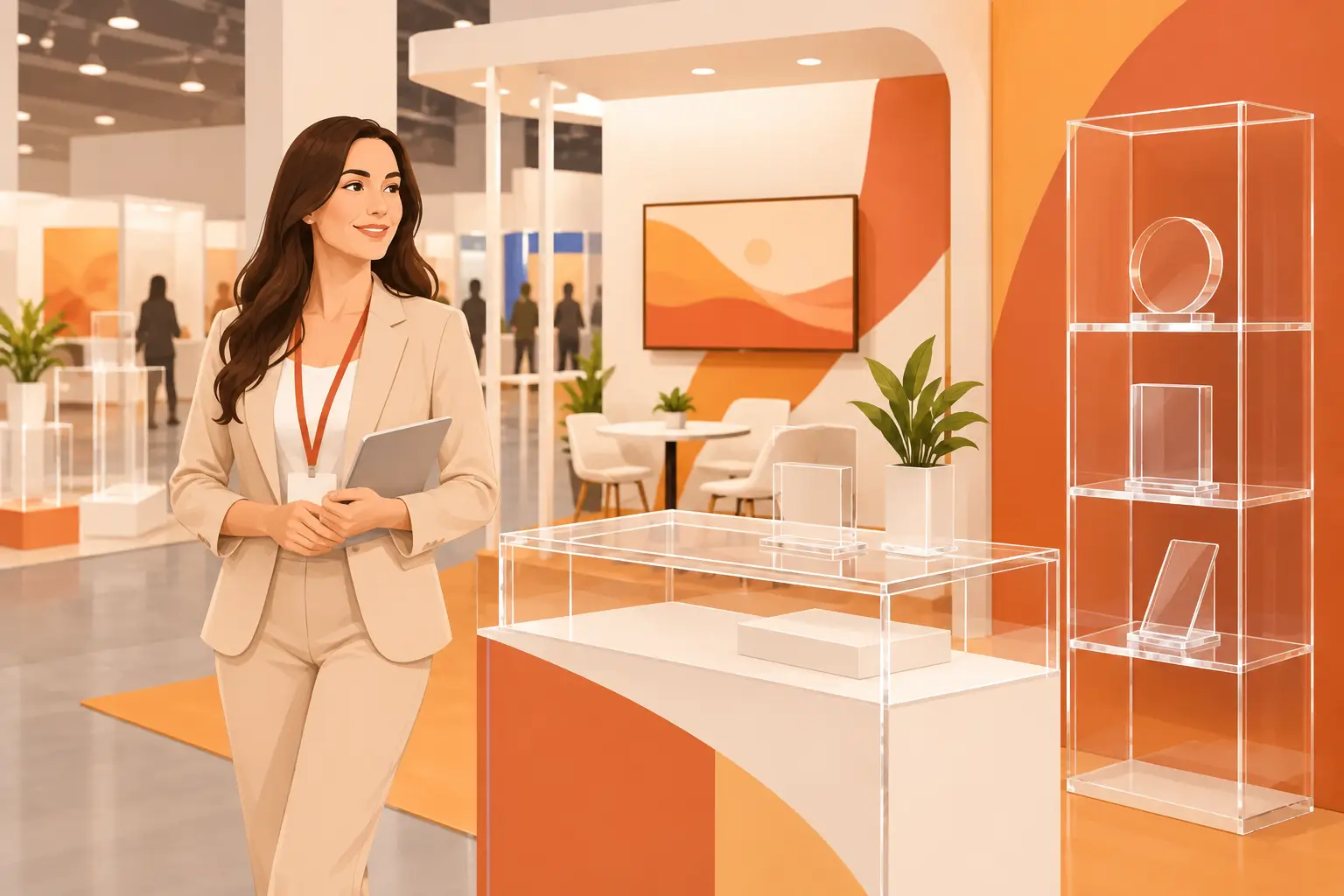
10 Acrylic Trade Show Display Examples That Work
A crowded show floor gives you only a few seconds to earn a closer look. The best acrylic trade show display examples do more than hold products: they organize the booth, clarify the brand, and make merchandise easier to see from every angle. Clear acrylic is especially effective when the product, packaging, or logo should remain the visual focus rather than disappear behind a bulky fixture.
For exhibitors, the right display is rarely a single off-the-shelf piece. It is usually a coordinated set of risers, holders, signs, and branded elements built around the way visitors move through the space. These 10 ideas show how acrylic can support a clean, professional booth while accommodating practical needs such as setup time, product security, lighting, and inventory access.
1. Tiered Product Risers for Hero Merchandise
Tiered risers are among the most useful acrylic trade show display examples because they create height without adding visual weight. A three-level riser lets a skincare brand, specialty food producer, jewelry maker, or electronics company present multiple products in a compact footprint while keeping every item visible.
Use taller levels toward the back of a tabletop display and lower levels near the aisle. This preserves sightlines and prevents front-row products from blocking the rest. Clear risers work well when product packaging carries strong color or detailed design. Frosted or colored acrylic may be the better choice when you need the display itself to reinforce a branded palette.
The trade-off is capacity. A riser improves presentation, but it is not always the best place for deep backstock. Plan concealed storage below the table or behind a backdrop so staff can replenish the display without cluttering it.
2. Branded Acrylic Logo Signs
A logo sign can establish ownership of the booth before a visitor reads a product label. Acrylic offers several polished options: laser-cut lettering, printed panels, dimensional logos, and layered signs that combine clear acrylic with opaque color.
A raised logo mounted on standoffs creates depth and catches overhead show lighting. For a more refined effect, a clear panel with a second printed layer can give artwork dimension without making the sign hard to read. White ink printing behind a full-color logo is often useful when the sign will sit against a busy booth wall.
Keep the viewing distance in mind. Fine type and intricate details may look excellent at arm’s length but disappear from across the aisle. Your primary logo should read quickly, while product claims and supporting copy can remain closer to the display.
3. Countertop Literature Holders That Stay Organized
Brochures, price sheets, spec cards, and business cards still have a place at many trade shows, particularly for business-to-business buyers who need details to take back to their teams. Clear acrylic literature holders keep these materials available without turning the counter into a paper pile.
Single-pocket holders are ideal for one focused message, while multi-pocket displays can separate catalogs, technical sheets, and order forms. A low-profile business card holder near a lead-capture device creates an easy next step for visitors who are not ready to start a conversation.
Avoid putting every printed asset on the table at once. Too many choices can make the booth feel dated and can bury the piece that matters most. Use the holder for materials that support the sales conversation, not materials that replace it.
4. Locking Display Cases for Small or High-Value Items
Trade show displays often need to balance access with protection. Locking acrylic cases are a practical solution for jewelry, collectibles, medical devices, premium samples, prototypes, and small electronics. Their transparent walls allow buyers to inspect the item while limiting casual handling and loss.
A well-built case should account for more than security. Consider whether the item needs a removable lid for demonstrations, a hinged door for staff access, or a fitted base that keeps it in position. LED lighting can improve visibility, but strong direct light may create glare on glossy acrylic. Diffused lighting or carefully placed spotlights usually produces a cleaner result.
If visitors need to touch the product to understand it, display one secured sample and keep a separate demonstration unit nearby. That approach protects inventory without making the interaction feel overly formal.
5. Floating Wall Displays for Product Stories
Acrylic wall panels can turn a plain pipe-and-drape booth or modular backdrop into a more intentional brand environment. Clear panels mounted with standoffs create a floating effect for product information, timelines, ingredient stories, technical diagrams, or before-and-after visuals.
This format is especially effective for brands with a process to explain. A custom fabricator may show material samples and fabrication stages. A beauty brand may show a simple product routine. A technology company can use layered panels to illustrate how components work together.
The key is restraint. A wall display should guide the eye, not become a dense presentation board. Use short copy, generous spacing, and one clear hierarchy of information. Visitors should understand the main point while walking by, then find detail when they stop.
6. Acrylic Tablet Stands for Interactive Demos
Tablets give exhibitors flexibility for product videos, portfolios, configurators, appointment booking, and lead collection. An acrylic tablet stand keeps the device at a comfortable viewing angle and allows it to look integrated with the booth rather than improvised.
For busy events, specify a stand with stable footing, cable management, and security provisions. A charging cord running across the counter can quickly undercut an otherwise polished presentation. If the device will be used by the public, choose a viewing angle that works for standing visitors and allows staff to see the screen when assistance is needed.
Interactive content should have a purpose. A short product selector or visual catalog can start valuable conversations; a long corporate video with no clear call to action usually will not.
7. Pegboard and Slatwall Product Displays
For products that come in multiple sizes, colors, or accessories, acrylic panels adapted for pegboard or slatwall hardware can create a flexible merchandising system. This works well for retail-ready packaged goods, tools, craft products, accessories, and small home items.
A clear acrylic backing keeps the assortment visible while allowing the products to provide color and texture. Branded header panels can identify categories without requiring a separate fixture for each group. Because hooks and shelves can be rearranged, this format is useful when the product mix changes from one event to the next.
Be realistic about weight. Acrylic components are strong when properly designed, but oversized or heavy items may require thicker material, reinforced mounting points, or a different display structure. Discuss product weight and hardware needs before fabrication rather than treating them as an afterthought.
8. Sample Trays and Tester Stations
Acrylic trays give hands-on products a defined home. Cosmetics, fragrances, food samples, hardware finishes, swatches, and material samples all benefit from a tray or organizer that separates items and simplifies restocking.
Custom-cut wells can hold sample bottles or components upright, which is useful when a crowded booth makes spills or tipping more likely. A printed acrylic base can label each option directly below the item, reducing questions and helping visitors compare choices independently.
For food or beauty sampling, plan for cleaning. Smooth acrylic surfaces are easy to wipe down, but the design should avoid inaccessible corners and unnecessary crevices. A removable insert may be worthwhile when frequent sanitizing is part of the event routine.
9. Clear Donation, Entry, and Lead-Capture Boxes
Acrylic boxes are simple, but they solve common show-floor needs. A ballot box can collect giveaway entries. A locked box can receive order forms, samples, or business cards. A branded clear enclosure can hold product feedback cards or encourage visitors to vote on a new design.
The box should make participation obvious. A wide slot, a short instruction panel, and a visible incentive are more effective than a generic container placed at the edge of the booth. If you are collecting leads digitally, a small acrylic sign beside the QR code can explain exactly what visitors receive after scanning.
Use clear walls when seeing entries build trust or social proof. Use an opaque printed panel when privacy matters, such as for survey responses or contact information.
10. Modular Acrylic Displays for Reusable Booth Systems
Acrylic is particularly valuable for exhibitors who attend multiple events each year. Modular risers, interchangeable sign panels, removable logo plates, and nesting display pieces can be reconfigured for different booth sizes and product launches.
This approach may cost more upfront than a one-time display, but it can reduce replacement costs and setup decisions over time. Keep transport in mind from the beginning. Pieces should nest where possible, have protective packing, and avoid fragile projections that are likely to break in transit.
Plastic Mart has fabricated custom acrylic pieces since 1961, making it possible to build coordinated display components around your product dimensions, branding, and event requirements rather than forcing a presentation into standard sizes.
Choose the Details Before Fabrication
The most effective trade show display is not necessarily the largest or most elaborate one. It is the one that presents the right product at the right height, gives staff room to work, and helps visitors understand what to do next. Before approving a design, confirm the product dimensions, expected handling, lighting conditions, booth footprint, packing method, and whether the piece will be reused.
Clear acrylic can make a compact booth feel open and considered, but thoughtful fabrication is what makes it perform under show-floor pressure. Start with the visitor experience you want to create, then let each riser, sign, case, and holder earn its place.
You must be logged in to post a comment.