
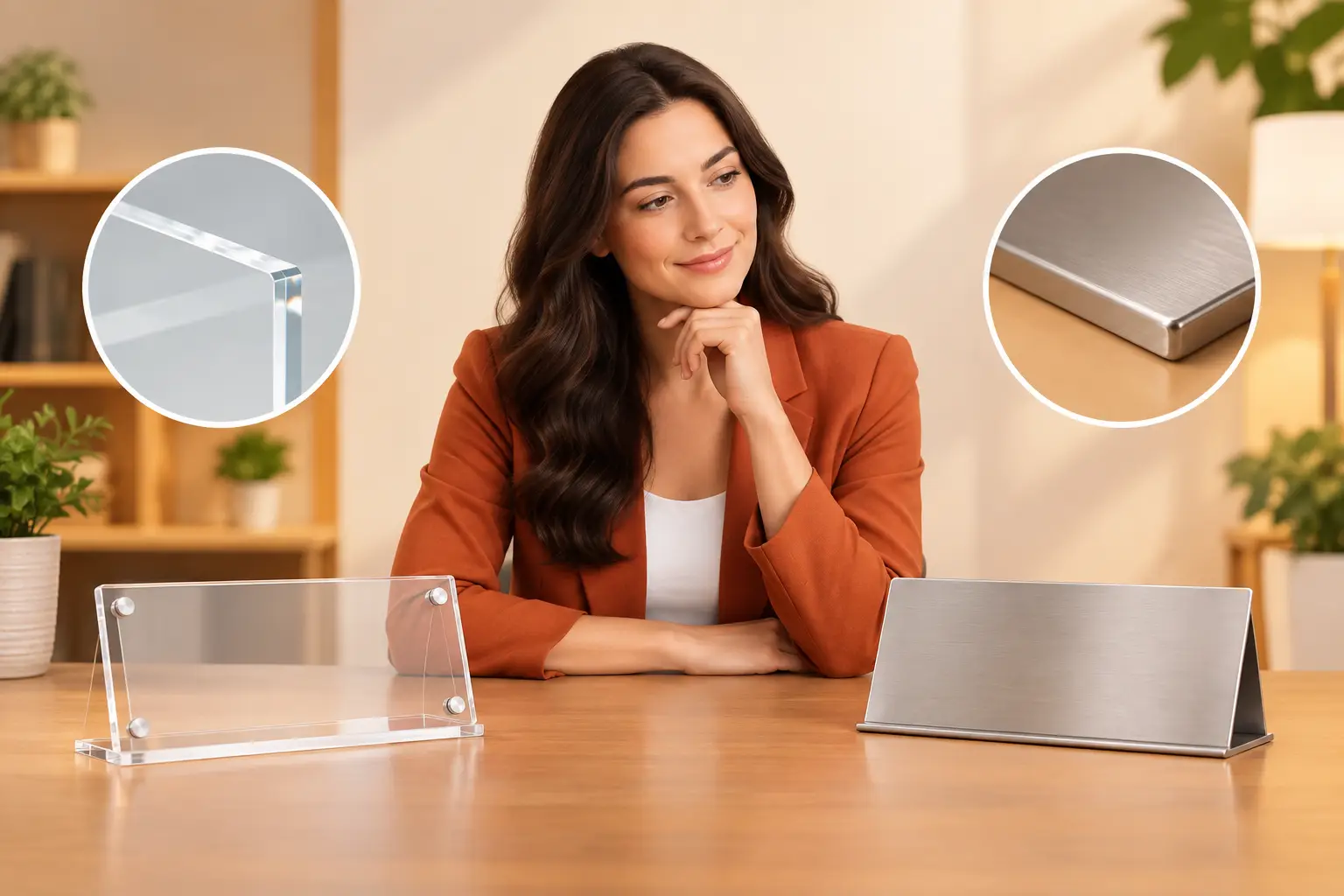
Acrylic Nameplates Versus Metal Nameplates
A nameplate may be small, but it does a serious job. It identifies people, directs visitors, labels equipment, and puts a company’s standards on display. When comparing acrylic nameplates versus metal nameplates, the best choice comes down to where the plate will live, how it will be used, and what you want it to communicate at first glance.
A polished metal plate can signal permanence and tradition. A precisely fabricated acrylic plate can feel clean, contemporary, and tailored to the rest of a space. Neither material wins every application. The right one is the material that holds up to the environment, supports your branding, and looks intentional years after installation.
Acrylic Nameplates Versus Metal Nameplates: The Core Difference
Metal nameplates are typically selected for their weight, familiar premium feel, and resistance to demanding environments. They are common on machinery, outdoor installations, industrial equipment, executive desks, and legacy-style office signage. Finishes may include brushed, polished, anodized, painted, etched, or engraved surfaces.
Acrylic nameplates are made from a clear, frosted, colored, or opaque plastic sheet that can be cut, engraved, printed, layered, or mounted with hardware. Their biggest advantage is design flexibility. Acrylic makes it possible to match brand colors, incorporate full-color graphics, create dimensional effects, and produce a refined look without visual heaviness.
For many interior applications, acrylic offers the sharper fit. It is especially well suited to modern offices, retail environments, reception areas, hotels, events, awards, product displays, and residential settings where the goal is a crisp, finished appearance rather than an industrial one.
Appearance: Classic Weight or Modern Clarity?
The visual character of metal is difficult to duplicate. Brushed aluminum, stainless steel, brass, and bronze bring natural variation and a sense of material weight. For a law office, heritage building, upscale hospitality setting, or equipment line intended to look permanent, metal can be the appropriate choice.
Acrylic has a different kind of presence. Clear acrylic can appear to float against a wall or door, especially when mounted with standoffs. Frosted acrylic softens glare and creates privacy while maintaining a clean, architectural appearance. Black, white, and colored acrylic provide strong contrast for room labels, desk plates, directional signs, and branded displays.
Layering is where acrylic becomes particularly valuable. A clear face over a colored backer, raised lettering, printed graphics, or laser-engraved details can create dimension without making a sign feel busy. This allows a business to carry its visual identity from a lobby feature to a small office nameplate with consistency.
Durability Depends on the Installation
Metal is generally the better option for severe conditions. A nameplate exposed to regular abrasion, extreme heat, chemicals, salt air, or heavy equipment use may require aluminum, stainless steel, or another specialty metal. The specific finish and marking method matter as much as the base material. A metal plate is not automatically weatherproof simply because it is metal.
Acrylic performs very well indoors and in protected exterior locations. It does not rust or corrode, and quality acrylic maintains its clarity and color well when the material and fabrication method are selected for the application. It is also lighter than metal, which can simplify installation on doors, partitions, display fixtures, and furniture.
There are trade-offs. Acrylic can scratch if cleaned with abrasive materials or harsh solvents, and it can crack under an unusually hard impact. Metal can dent, show fingerprints, oxidize, or develop finish wear depending on the alloy and environment. Before choosing either material, consider sun exposure, cleaning routines, moisture, mounting surface, and how often people will touch the plate.
For outdoor signage, specify the whole system
Outdoor nameplates need more than a durable face material. Adhesives, mounting hardware, ink, engraving depth, and UV exposure all affect service life. Acrylic may work beautifully for a covered entry, wayfinding panel, or protected exterior directory. An exposed industrial site or marine setting may call for metal with a finish designed for that level of exposure.
The most reliable approach is to describe the actual conditions before fabrication begins. A plate beside a front door and a plate mounted on outdoor equipment have very different requirements, even if they use the same logo.
Customization and Brand Control
Acrylic gives designers and businesses more freedom to work with color, shape, transparency, and layers. It can be fabricated into custom contours, routed to exact dimensions, edge polished, or combined with other materials. Digital printing allows detailed logos, gradients, photographs, QR codes, and small text without the color limitations that can come with engraved metal.
This matters when nameplates are part of a larger branded environment. A retail team might use clear acrylic for product labels, frosted acrylic for shelf dividers, and colored acrylic for staff identification, all tied together by the same typography and palette. A property manager might use a coordinated set of room signs, tenant markers, and directional panels without relying on a one-size-fits-all sign system.
Metal also offers useful customization, particularly for engraving, etching, serial numbers, and durable identification marks. It is often preferred where the information needs to remain legible through hard use. If the design is primarily black text on a brushed silver field, metal can deliver an appropriately direct result.
For more visual or presentation-driven projects, acrylic is often easier to tailor. Experienced fabrication is essential, though. Clean edges, accurate drilling, properly aligned layers, and well-chosen mounting methods are what separate a custom nameplate from a piece that looks temporary.
Cost: Look Beyond the Initial Price
Acrylic nameplates are often more cost-effective than metal for custom interior projects, particularly when color printing, unusual shapes, or layered construction are involved. The material is lighter, fabrication can be efficient, and the finished piece may require less specialized handling during shipping and installation.
Metal pricing can rise with material thickness, alloy selection, finishing, engraving, and production methods. That additional cost can be justified for long-term equipment labeling, high-traffic exterior use, or a setting where the material itself is central to the desired impression.
Quantity changes the equation. A single executive desk plate may be inexpensive in either material, while a large run of employee badges, room plaques, or serialized asset tags will benefit from planning around production efficiency. The right fabrication partner can help standardize sizes, artwork, mounting details, and replacement procedures so future orders stay consistent.
Installation and Maintenance
Acrylic’s lighter weight is a practical advantage in many commercial interiors. Depending on the project, it can be installed with adhesive, screws, standoffs, or decorative mounting hardware. Clear acrylic also works well on glass, painted walls, wood panels, and display fixtures because it does not visually overpower the surrounding finish.
Metal may require more substantial hardware, particularly for larger or thicker plates. It can also be a better candidate for permanent mechanical fastening on machinery or exterior surfaces. For either material, mounting should be decided early. A plate designed for adhesive is not always interchangeable with one designed for concealed screws or stand-offs.
Routine care is straightforward. Acrylic should be cleaned with a soft microfiber cloth and a cleaner approved for acrylic or plastics. Avoid paper towels, ammonia-based glass cleaners, and abrasive pads, which can leave fine scratches. Metal should be cleaned according to its finish – stainless steel, brass, aluminum, and coated metals each respond differently to moisture and cleaning products.
When Acrylic Is the Better Choice
Choose acrylic when the project calls for a modern, polished look with strong customization options. It is an excellent fit for office doors, reception desks, conference rooms, retail displays, awards, branded plaques, donor recognition, menu holders, and indoor directional signage. It also makes sense when a lightweight material, full-color graphics, or a clear or frosted effect will improve the finished design.
For custom-built pieces, acrylic supports details that make a space feel considered: polished edges, layered logos, dimensional lettering, and color-matched elements. Plastic Mart has fabricated acrylic products for functional and branded applications since 1961, bringing the same attention to material selection and finish quality to custom nameplate projects.
When Metal Is the Better Choice
Choose metal when environmental exposure, impact resistance, or a traditional material presence is the priority. Metal is often the safer choice for heavy machinery, outdoor equipment, industrial asset tags, memorial plates, and locations subject to frequent handling or aggressive cleaning.
It can also be the right aesthetic decision. A brushed brass nameplate on a traditional desk or an etched stainless plate on commercial equipment communicates something acrylic is not meant to imitate. The goal is not to force one material into every setting. It is to select the material that fits the job honestly.
A well-made nameplate should look like it belongs where it is installed. Start with the environment, then the desired appearance, then the fabrication details. That order leads to a nameplate that does more than provide information – it reinforces the quality of the space, product, or brand it represents.